
Anxiety and dementia.
Anxiety in dementia is worry, fear or unease that a person living with dementia can’t easily explain or shake off. It may show as restlessness, the same question again and again, or following you from room to room.

Anxiety in dementia at a glance
Anxiety is common in dementia. When memory leaves gaps, the world can feel uncertain, and worry fills the space. It isn’t on purpose and it isn’t your fault. Calm reassurance, a steady routine and a check for hidden needs often help.
- What you may see
- Worry, pacing, repeated questions, or staying right at your side.
- Common triggers
- Change, noise, being left alone, or a need they can’t name, such as pain or thirst.
- What helps
- Staying close, a calm voice, a predictable day, and something simple to do together.
- When to call the doctor
- If it’s new, sudden or getting worse. Pain, an infection or a medicine can be behind it.
55%
of caregivers of someone with Alzheimer’s see anxiety at least once a week, and 24% see it every day. Harris Interactive, 2013, used with permission. See all the figures
What does anxiety in dementia look like?
Anxiety in dementia often shows in what a person does more than in what they say. Your dad may not tell you he’s worried, but he may pace, ask when you’re leaving every few minutes, or not want you out of his sight.
- Worry they can’t explain Seeming uneasy, fearful or on edge, with no reason you can see.
- The same question, again Where’s my purse? When are we going? Asked over and over, it can be worry talking, not only memory.
- Following you everywhere Staying at your side from room to room, even waiting outside the bathroom door. This is often called shadowing.
- Upset when someone leaves Calling out, crying or trying to follow when you, or a visitor, head for the door.
- Restlessness Pacing, fidgeting, rubbing their hands, or getting up and sitting down again and again.
- Wanting to be somewhere else Asking to go home while at home, or fretting about getting to work or picking up the children, years after those days.
- Uneasy with new faces Growing tense around people they don’t recognize, or anywhere outside the usual routine.
- Irritable or tearful Snapping, crying easily, or being harder to settle than usual.
Anxiety often travels with other signs. See our guides to sundowning, irritability and sleeplessness.
What causes anxiety in dementia?
Dementia changes the parts of the brain that help a person make sense of the world and cope with stress. Add a gap in memory, a change or a hidden need, and an ordinary moment can start to feel unsafe.
-
Gaps in memory
If they can’t remember where you went or why, the not knowing can turn into fear. You stepped out for the mail; to them, you may have simply vanished.
-
Change
A move, a hospital stay, a trip, houseguests or a new caregiver can unsettle even a calm person.
-
Too much at once
Noise, glare, a TV left on or a crowded room can be more than a tired brain can sort out.
-
Sensing something is wrong
Early on, a person may notice their memory slipping and worry about how they’ll cope and what comes next.
-
A need they can’t name
Pain, hunger, thirst, constipation, a full bladder or being worn out can come out as worry.
-
Illness, medicines and caffeine
An infection, a side effect or too much coffee can bring anxiety on or make it worse. Their doctor can check.
Keeping track of the worry can help you and their doctor spot a pattern and its cause, the National Institute on Aging notes. Write down when it starts, what happened just before, and what helped.
How can you calm anxiety in dementia?
Slow down, reassure, look for a need, then give the worry somewhere else to go. Facts and logic rarely help, because the feeling is real even when the reason for it isn’t.
-
Slow down
Take a breath. Move slowly, speak softly, and stay where they can see you.
-
Name the feeling
Try “You seem worried. I’m right here.” Listening helps more than explaining.
-
Reassure
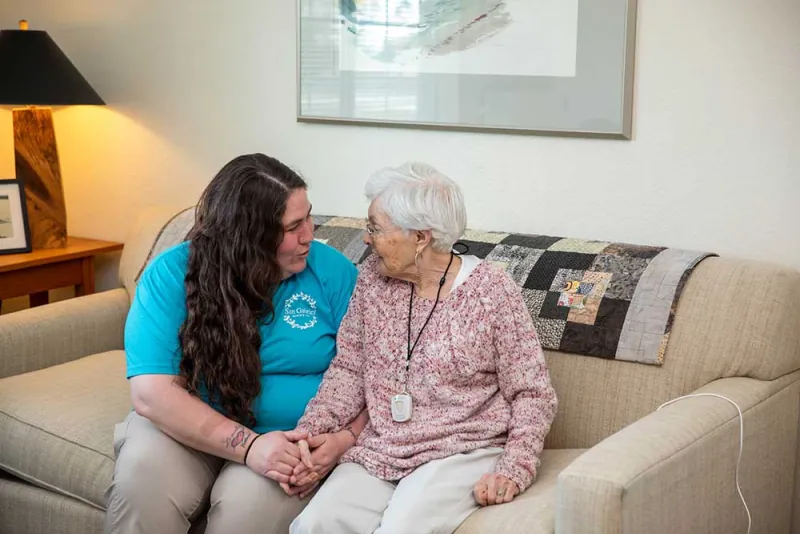
Tell them they’re safe and you’ll stay until they feel better. A hand on the arm can say it too.
-
Check for a need
Are they in pain, hungry, thirsty, cold, or needing the bathroom?
-
Give it somewhere to go
Go for a short walk, put on music they love, or ask for help with a small job, like sorting socks.
How do you leave without upsetting them?
Plan the moment, keep the goodbye short and warm, and leave a reminder that you’re coming back. Done the same way each time, leaving becomes part of the routine instead of a shock.
-
Before
Pick a good moment
Leave as something pleasant begins: a meal, a favorite show, an activity with someone they know. Keep your coat and keys out of sight until then.
-
Going
Short and warm
Smile, say you’ll be back soon, and go. A long, drawn-out goodbye can stir up more worry.
-
Away
Leave a reminder
A note in large print by their chair, saying where you are and when you’ll be home. A short phone call can help too.
-
Back
Notice what worked
If they settled quickly, do the same next time. If not, try another time of day or another helper.
Around the house, it can help to bring them along. Let them sit with you while you cook, or hand them the towels to fold. Being near you may be all they need.
What everyday habits ease anxiety?
A calm, predictable day with movement, music and familiar things helps many people living with dementia feel more settled. Small habits add up when you keep them going.
Try this
- Keep meals, baths and bedtime at about the same times each day
- Get moving together: a walk, some gardening, a dance in the kitchen
- Keep favorite photos and well-loved things in sight
- Play music they’ve loved for years
- Answer repeated questions kindly, and write the answer on a note they can see
Try to avoid
- Arguing, correcting, or saying “I already told you”
- A TV or radio left on in the background
- Clutter, crowds and rushed mornings
- Coffee, tea and cola late in the day
- Too many questions or choices at once
When to call the doctor
Call their doctor if anxiety is new, comes on suddenly, or keeps getting worse. A sudden change in behavior, especially after an infection or a new medicine, needs a doctor’s attention right away.
- A sudden change over hours or days, or swings between calm and very upset
- A new medicine, or a change in a dose, shortly before the anxiety began
- Signs they may be in pain or unwell. They may not be able to tell you, so ask the doctor to check
- Worry that keeps them from eating, sleeping or enjoying anything
- Anxiety that keeps building, even with a calm routine
Call 911 if a sudden change comes with weakness, numbness or trouble speaking, which can be signs of a stroke, or if anyone is in danger. Tell the dispatcher your loved one has dementia.
Not sure if it’s time?
Most families aren’t. Call us and talk it over. There’s no pressure and nothing to decide.

How San Gabriel helps with anxiety
Even pleasant events like the arrival of visitors can be a significant source of stress.
San Gabriel is designed to shield the comings and goings of loved ones to minimize anxiety in residents who may want to follow friends and family as they leave but cannot.
Questions families ask about anxiety in dementia
Why does my mom follow me everywhere?
Following a caregiver from room to room, often called shadowing, is often a sign of anxiety. Dementia can leave a person feeling unsure and unsafe, and keeping you in sight is how they check that they aren’t alone. It can help to keep them with you while you do chores, such as cooking or folding laundry. It can wear you out, so plan breaks when someone else they know can sit with them.
Why does she get so upset when I leave?
Memory loss can make a short absence feel like a long one. If your mom can’t hold on to where you went or when you’ll be back, the gap fills with worry. The Alzheimer’s Society suggests that, for some people, it’s easier to leave just as an activity or a meal begins. Keep the goodbye warm and brief, and leave a note saying when you’ll return.
What do I say when they ask the same question over and over?
Answer calmly, as if it’s the first time, and listen for the worry underneath. “When are we going?” may really mean “Will I be left behind?” Reassure the feeling, then write the answer on a note or whiteboard they can see. If talk of a trip or an appointment days away sets off the questions, it may help to mention it closer to the time.
Is anxiety an early sign of dementia?
It can be. The Alzheimer’s Association lists mood changes, including becoming fearful or anxious, among the early signs of Alzheimer’s and other dementias. Some people grow anxious as they notice their own memory slipping. But anxiety has many other causes, including stress, other illnesses and medicines. If worry is new in later life and comes with memory changes, ask their doctor for a checkup. Our guide to memory loss explains what to watch for.
Can anxiety make dementia worse?
It can make thinking harder. The Alzheimer’s Society notes that anxiety can make it harder to pay attention, plan and remember. Cleveland Clinic adds that mood and behavior symptoms left untreated may wear down memory and language sooner, and lower quality of life for you both. That’s a good reason to raise anxiety with their doctor as a health problem, not just a mood to wait out.
Is there medicine for anxiety in dementia?
Sometimes, but it isn’t usually the first step. For agitation in Alzheimer’s, the Alzheimer’s Association recommends starting with non-drug approaches, such as changes to the setting and the daily routine. Some medicines can cause or worsen anxiety, so ask the doctor to review everything your loved one takes. If anxiety is severe or won’t ease, their doctor can talk through the options with you.
How do I get a break when they won’t let me out of sight?
Start small. Ask a family member or friend your loved one knows to take a regular shift, so a familiar face becomes part of the routine. Tell their doctor how much the anxiety is affecting you both. A short respite stay at our Highland or Godfrey community gives your loved one a safe place, with a dementia-trained team, while you rest.
Sources
- Anxiety and Agitation, Alzheimer’s Association
- 10 Early Signs and Symptoms of Alzheimer’s and Dementia, Alzheimer’s Association
- Repetition, Alzheimer’s Association
- Alzheimer’s Caregiving: Managing Personality and Behavior Changes, National Institute on Aging
- Coping With Agitation, Aggression, and Sundowning in Alzheimer’s Disease, National Institute on Aging
- Adapting Activities for People With Alzheimer’s Disease, National Institute on Aging
- Anxiety and dementia, Alzheimer’s Society
- Supporting a person with dementia in a care home, Alzheimer’s Society
- Alzheimer’s Agitation: Why It Happens and What Can Help, Cleveland Clinic
- How To Care for Someone With Alzheimer’s Disease, Cleveland Clinic
- Stroke, MedlinePlus, National Library of Medicine
Last checked against these sources on November 17, 2026. This page is for families learning about dementia. It isn’t medical advice: talk with your loved one’s doctor about any change you notice.
Other signs families notice
Each one, and how we help with it.
Come see how we help.
Visit, meet our team and ask anything. There’s no pressure and nothing to decide today.
- Ask for a tour Send the form, or give us a call.
- We call you back Someone from San Gabriel calls to find a time that works for you.
- Come and visit See the rooms, meet our team and ask anything. There’s nothing to decide that day.
